Latest Phones 2026: Government Wireless Options Guide
This guide helps you compare Latest Phones 2026 options alongside major government wireless programs that support eligible households. It explains how Lifeline-based phone offerings generally work, what documents are commonly needed, and how providers like SafeLink Wireless and Assurance Wireless evaluate applicants. Background context covers what “Lifeline/ACP” means in practice and how network plans vary by region.
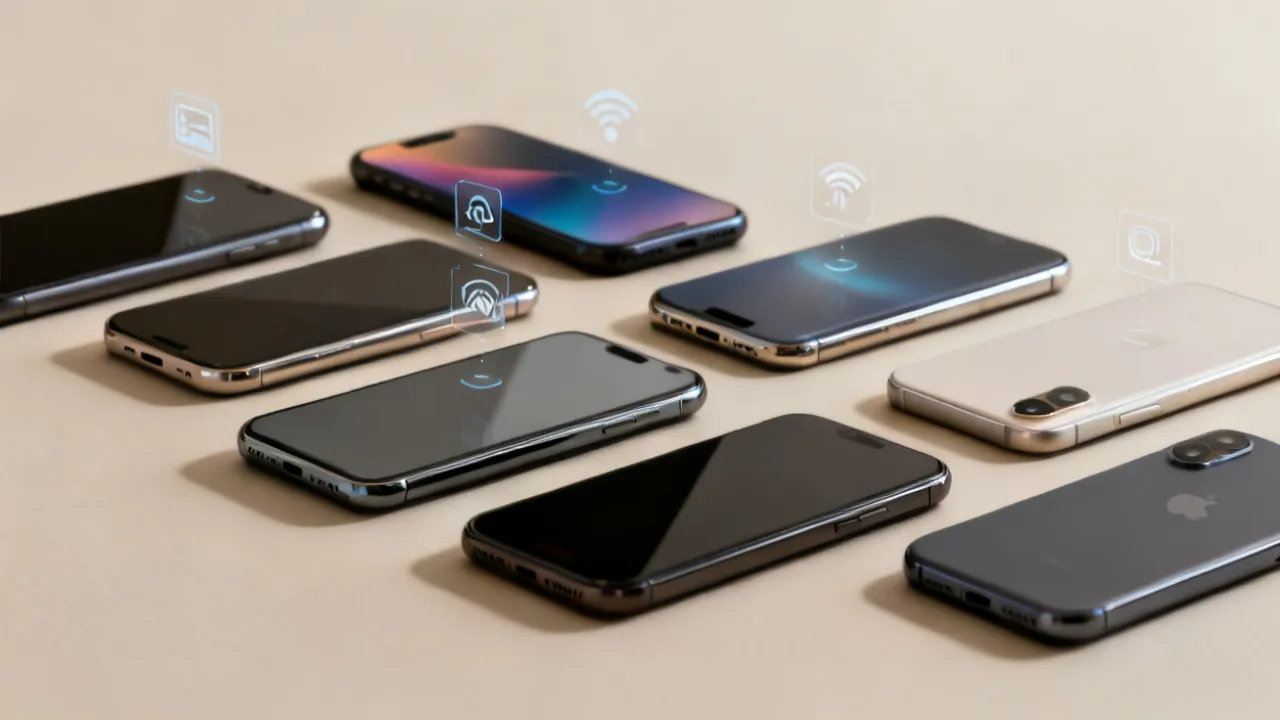
Quick Take: How to choose Latest Phones 2026 with government wireless support
If you’re trying to get the very value from Latest Phones 2026, start with a simple decision: do you want an eligible subscriber program that bundles handset and service, or are you bringing your own device (BYOD)? In the United States, the very common government-backed pathways for qualifying consumers are Lifeline and the Affordable Connectivity Program (ACP), which are designed to reduce monthly communication costs for households that meet specific income or benefit criteria. Provider policies can vary—so the fastest route is to match your eligibility category first, then compare the handset/service bundles offered by participating carriers.
Below, you’ll find a structured comparison of major government phone plan providers (including SafeLink Wireless, Assurance Wireless, StandUp Wireless, Access Wireless, and True Wireless), along with application steps, typical documentation expectations, and expert guidance on avoiding common pitfalls when switching or enrolling. You’ll also see practical “how to choose” guidance tailored to what most people want when they say “latest phones”—better cameras, smoother performance, reliable data, and the ability to keep the phone they get working long-term without unexpected cost spikes.
Why Latest Phones 2026 matter (and what to check before enrolling)
From an industry perspective, “Latest Phones 2026” usually reflects two overlapping realities: (1) device ecosystems are changing quickly (battery efficiency, modem capability, camera tuning, and software update cadence), and (2) the availability of newer models within government-supported handset programs may not track the commercial retail cycle. That means many eligible customers receive a model that meets network and provisioning requirements rather than a specific 2026 flagship.
So when you compare options, prioritize these practical checks. Think of it as evaluating a “bundle” rather than a phone in isolation:
- Network compatibility: confirm the plan’s service type (voice/SMS/data) and whether it matches the coverage you experience at home, work, and along your commute.
- Data expectations: even when plans include “unlimited” voice and text, high-speed data may be limited or throttled after a threshold. Ask how speed changes after usage.
- Handset policy: determine whether the provider offers a device, requires BYOD, or allows upgrades at an added cost.
- Activation and timeline: enrollment approval and SIM/eSIM provisioning can take time; plan the switch to avoid losing connectivity during verification.
- Hotspot needs: if you rely on mobile hotspot for a laptop or tablet, verify whether hotspot is allowed and whether it has separate limits from phone data.
- Storage and app needs: if you plan to use navigation, photo/video apps, or telehealth services, more storage can reduce “storage full” problems over time.
- Update longevity: newer devices typically get security updates longer (if supported). A phone that stops updating sooner can create long-term usability and safety tradeoffs.
One important mindset shift: the “best deal” is not always the phone with the largest camera numbers or the highest spec sheets. It’s often the device that you can keep working reliably with the data plan you truly need—plus the plan’s pricing stability if you exceed typical monthly usage patterns.
Provider landscape: government phone plan options you’ll commonly see
Several Lifeline- and ACP-linked programs operate through different brands. The program mechanics typically follow eligibility rules set around income or participation in government assistance. The provider then supplies a qualifying plan structure, and may include a smartphone (often an Android device) or allow customers to use their own compatible phone.
In this guide, we focus on five widely recognized brands:
- SafeLink Wireless
- Assurance Wireless
- StandUp Wireless
- Access Wireless
- True Wireless
Note: Handset availability and plan details can differ by state, program category, and network configuration. Treat the comparisons below as a framework, not as a guarantee of exact model or exact data speed. The key is to check the “current” device listing and data terms on the official site or during enrollment, because inventory and plan configurations can change.
| Provider (official program page) | Services typically included (government-supported) | Possible additional package costs (if applicable) |
|---|---|---|
| SafeLink Wireless | Unlimited text and calls; data included based on plan terms. May include smartphone or BYOD options depending on the program configuration. | Premium device upgrades and/or extra data boosts may cost additional amounts. |
| Assurance Wireless | Affordable Android smartphone (where applicable); unlimited talk and text plus data allowances based on eligibility-linked plan structure. | Optional upgrades such as higher high-speed data tiers or international calling features may add charges. |
| StandUp Wireless | Smartphone or BYOD options; unlimited talk and text and data plans aligned with program benefits. | Premium phone upgrades and extra data availability may be offered for a fee. |
| Access Wireless | Unlimited voice and text; limited high-speed data structure tied to Lifeline and ACP benefits. | Data boosts and device upgrades are commonly offered for an additional cost (terms vary). |
| True Wireless | Government-supported handset and service options; voice and data plans tied to eligibility. | Optional improvements to better devices or additional data plans may add cost. |
Source: The table information is drawn from the providers’ official program pages: www.safelinkwireless.com, www.assurancewireless.com, standupwireless.com, www.accesswireless.com, www.gotruewireless.com.
Eligibility overview: who typically qualifies
Across these providers, the eligibility criteria generally align with federal Lifeline and ACP frameworks. In practice, qualification is determined through income documentation or participation in certain assistance programs.
Common qualifying pathways include:
- Income-based thresholds: Lifeline commonly uses a threshold around at or below 135% of the federal poverty guidelines; ACP commonly uses around 200% of the federal poverty guidelines (as applicable).
- Program participation: many applicants qualify through participation in assistance programs such as Medicaid, SNAP, SSI, or FPHA (program availability may differ by state and circumstances).
- Tribal residency (where applicable): residing on Tribal lands can provide additional benefit considerations under program rules.
Because verification rules can vary by the specific benefit source, it’s wise to prepare your documentation before submitting applications. Also consider timing: if you expect your income or benefit participation to change soon, you might want to enroll when you know your documentation will still be considered current.
To make this practical, many applicants find it helpful to do a “documentation checklist” before going online. For example, verify that you have:
- One document showing identity (such as a government-issued ID, depending on what the provider requests).
- One document showing eligibility (income statement, benefits letter, or enrollment proof).
- Accurate contact information for follow-up verification.
- Your address in a format that matches documents (apartment number and ZIP code details matter).
How to apply: step-by-step guide (what to expect)
Applying for government-supported wireless service typically follows a consistent flow: submit information, verify eligibility, then activate the service. Below is a practical process you can use regardless of which provider you choose. Even though each brand may have its own portal design, the overall steps are similar—so knowing what comes next reduces stress and prevents accidental errors that can lead to delays or denials.
1) Confirm your eligibility category
- If you qualify via income, gather documents that show current income and household information.
- If you qualify via a benefit program, keep enrollment details or proof of participation (e.g., program benefit statements or verification letters, depending on what the provider requests).
If you aren’t sure which category you fall into, check the provider’s application guidance carefully. A surprising number of issues come from selecting the wrong eligibility source. The application often uses that selection to choose the verification workflow.
2) Choose the enrollment route: smartphone offer vs BYOD
- Device-included path: some providers offer an eligible handset—often an Android—once verification is completed.
- BYOD path: if you already own a compatible phone, you may be able to apply service benefits to your existing device, depending on network requirements.
This step is where many people either get the best value or lose time. Choosing BYOD can save money upfront, but it may limit how “latest” the experience feels if your phone is older or lacks modern modem support. Choosing a device can be great if you need a reliable upgrade, but you should verify whether the offered model meets your expectations for performance, battery health (in new-device form), and software update longevity.
3) Submit the online application
- Very providers use online forms to collect personal details and eligibility information.
- Some applications may require additional steps through a verification system tied to national eligibility workflows.
During submission, pay special attention to matching your information exactly. Spelling mismatches, incorrect apartment/unit numbers, or outdated mailing addresses can create avoidable delays.
4) Complete document upload or verification
- Be prepared to upload documents if the provider requests additional proof.
- For accuracy, double-check names, addresses, and identifiers so they match what appears on your benefit or income documentation.
If you upload documents, ensure they are readable. Blurry photos, cut-off information, or missing pages can trigger “cannot verify” responses, requiring resubmission. Keep a clean scan or a clear photo on hand so that you can re-upload quickly if needed.
5) Wait for approval and then activate service
- After approval, the provider typically guides you through activation.
- If you are switching numbers, plan for number porting timing so you don’t lose contact with employers, healthcare providers, or schools.
If you can, schedule activation when you can manage a short downtime window. Many people fail to plan for the “transition day,” then end up scrambling for a temporary phone or missing key calls.
Conditions and requirements: typical “fine print” to review
In expert practice, the very common enrollment issues arise from misunderstandings about what qualifies, what “service limits” mean, and what happens when users request upgrades. Use the checklist below to reduce delays and avoid surprises.
| Requirement area | What it usually means | Why it matters |
|---|---|---|
| Proof of eligibility | Income documents or proof of participation in a qualifying assistance program | Verification delays can postpone activation |
| Household and identity match | Information must align with submitted documents | Mismatch can trigger re-submission or denial |
| Provider-plan terms | Unlimited talk/text is commonly included; data terms can include caps or limited high-speed usage | Prevents “surprise” speed reductions after threshold |
| Device upgrade or additional data | Upgrades may require additional payments | Budgets differ depending on whether you stay with the base offer |
| Activation timing and switching | SIM/eSIM provisioning may take a short period | Avoids downtime during verification-to-activation transition |
Expert comparison: what to choose if you want Latest Phones 2026 value
When readers ask about Latest Phones 2026, the underlying goal is usually cost control without losing usability. In that context, the “top” choice is often less about chasing a specific model number and more about aligning three components: device capability, connectivity reliability, and plan structure.
To choose well, ask yourself a few questions. These questions are more useful than “Which provider is best?” because they reflect your daily life:
- Do you need your phone for job applications, forms, and email during the day (meaning you need stable data and a responsive device)?
- Do you rely on maps, rideshare, and live traffic updates (meaning you need adequate data speed and hotspot options)?
- Do you make lots of video calls or attend telehealth sessions (meaning you need consistent bandwidth and a camera that can handle these calls)?
- Do you need a battery that lasts through the day without constant charging (meaning you value efficiency and battery capacity)?
- Do you share data via hotspot for another device (meaning you should verify hotspot rules before assuming unlimited behavior)?
Scenario A: You need a working handset quickly
- Prioritize providers that clearly state their device-included option and confirm the activation process.
- Before enrolling, check whether the plan’s data structure is sufficient for your daily tasks (maps, messaging, video calls, and email attachments).
- Ask what happens if the device arrives and you still can’t activate right away—some programs provide activation steps and support, while others push you to self-service portals.
Speed matters in this scenario, but “fast” has two meanings: fast to verify (approval and provisioning) and fast to perform (phone responsiveness). If you tend to use your phone as your primary device, choose a plan and phone combination that reduces lag, app crashes, and slow loading—because those “small frictions” accumulate over the day.
Scenario B: You already own a modern phone
- BYOD can be a practical way to keep your handset while gaining plan benefits.
- Ask the provider whether your device is compatible with their supported networks and provisioning method.
- Confirm whether your phone supports the needed SIM/eSIM configuration. Some devices may need specific carrier provisioning to work seamlessly.
BYOD is often a great fit if your phone still has a strong battery, you’re satisfied with the camera, and you don’t want to go through a phone migration (transferring contacts, photos, authenticator apps, and saved passwords). However, BYOD can backfire if your phone’s network bands don’t align well with the provider’s network or if data provisioning doesn’t work reliably.
Before committing to BYOD, a “compatibility check” mindset helps. Consider verifying:
- Whether your phone model is supported (or at least compatible) with the provider’s network type.
- Whether you will need to unlock the phone (if it is still locked to another carrier).
- Whether your phone can handle the service provisioning flow (especially if eSIM is used).
Scenario C: You want a newer camera and smoother performance
- If “newer” is your priority, compare what handset upgrades are available and whether the cost is justified compared with the base device.
- Also consider software update longevity—an often-overlooked factor in device experience.
- Look for phones with adequate storage and modern processors for smoother camera startup and faster app loading. Even mid-range devices can feel “premium” if they’re not constantly running out of memory or storage.
When people say they want the “latest phone,” they often mean one of three experiences: (1) photos that look good in different lighting, (2) faster processing (less lag when switching between apps), and (3) better video performance (stabilization, autofocus, and sustained recording). Government program phones may be newer than older devices, but you should still verify the actual device offered to you—especially if your daily needs include work photos, school presentations, or telehealth video.
Potential add-ons: how extra data and upgrades usually work
Many government-supported plans include basic voice, text, and a data allowance structure. When consumers need more bandwidth—often for hotspot usage, navigation, or streaming—they may encounter options such as:
- Data boosts (short-term or incremental top-ups)
- Higher data tiers (paid upgrades)
- Premium handset upgrades (paid device changes)
From a cost-management standpoint, it’s smart to treat add-ons as variable expenses and confirm their pricing model before you rely on them for essential services. “Unlimited” marketing can sometimes refer only to voice and text, while data may be capped at a certain high-speed level. Knowing this early helps you avoid unexpected budget problems.
Here are a few practical questions to ask during enrollment or before you choose a plan configuration:
- If I use my full high-speed data allowance, what happens next—does data continue at reduced speeds, or does it pause until reset?
- How often does data reset (monthly, billing cycle, enrollment month)?
- Are hotspot data limits separate from phone data limits?
- Do add-ons require a credit card, or can they be purchased through a balance method?
- Is there a way to monitor remaining high-speed data easily (app, website, or SMS alerts)?
Choosing between brands: how to compare beyond the headline
It can be tempting to choose solely based on brand familiarity (“which one sounds best?”). But for many eligible customers, the real differences show up in:
- Device options: which model(s) are available in your area right now.
- Activation process: how smooth the transition is when switching from another carrier.
- Data behavior: whether “unlimited” is consistent with your usage pattern, or whether your essential tasks will often run in reduced-speed mode.
- Support responsiveness: what happens when you can’t activate or when you have provisioning errors.
Because Latest Phones 2026 depends heavily on what exact handset you receive, your best comparison method is to check the current device listing during the enrollment process (or ask customer support what the expected device models are for your eligibility tier). If one provider offers a better-performing phone at your eligibility level, it can outweigh small differences in data pricing.
Practical handset evaluation checklist (for the “latest phone” goal)
When you get to the handset selection stage—either for a provided device or as part of a BYOD choice—use this checklist to evaluate whether the device will actually feel “modern” to you in daily life.
- Battery and charging expectations: Does the device likely reach the end of your day with moderate usage? If you’re a heavy user (maps, video, messaging), battery efficiency matters as much as capacity.
- Performance for your apps: If you use navigation, banking apps, and video calls, you want enough processing power to avoid lag and to keep apps responsive.
- Camera usability: Instead of only megapixels, consider camera “behavior”: does it take a while to launch? Does it struggle in low light? Do you frequently need autofocus?
- Software experience: Modern phones usually include smoother UI transitions and longer update windows. A phone that remains updated is safer for banking and account authentication apps.
- Storage capacity: If you take many photos or download offline materials for school or work, more storage can prevent constant cleanup.
- SIM/eSIM readiness: If the provider uses eSIM, you should confirm your device supports that provisioning method.
Even when the offered device isn’t the absolute newest commercially, these factors help you approximate what you’ll feel day-to-day. In other words: “latest” should mean “best fit,” not only “newest release.”
How to avoid common pitfalls when enrolling or switching
Government phone enrollments can be straightforward, but pitfalls are common—mostly due to paperwork and timing, not because applicants are doing anything wrong. Here are frequent problem areas and how to reduce the risk.
Pitfall 1: Selecting the wrong eligibility pathway
Many application forms include multiple eligibility categories. If you accidentally select the wrong one (for example, income instead of participation, or vice versa), you might be sent through an incompatible verification workflow. Fixing this can take time.
How to avoid it: review your documents and ensure your selection matches the proof you can provide.
Pitfall 2: Mismatched names, addresses, or identifiers
A small typo can trigger verification errors. For example, leaving off an apartment number, using an old ZIP code, or entering a middle initial inconsistently can cause a re-check.
How to avoid it: copy exact details from your eligibility document. If the document says “APT 2B,” enter it exactly that way.
Pitfall 3: Assuming “unlimited data” is fully unlimited at high speeds
Many plans are “unlimited” for voice and text. Data may include a high-speed cap. After reaching a threshold, data can slow significantly.
How to avoid it: ask what “unlimited” includes, check whether hotspot is allowed, and understand the high-speed limit and throttling behavior.
Pitfall 4: Not planning number porting timing
If you have important contacts tied to your number—healthcare offices, employer, school, authentication codes—plan the switch carefully. Porting delays can lead to temporary loss of service or temporary changes to who can reach you.
How to avoid it: choose a day with time available for troubleshooting and make sure you can access alternative contact methods during the transition (email, another device, or backup messaging).
Pitfall 5: Buying or accepting a phone upgrade without checking total cost
Sometimes “upgrade options” are offered as premium devices or additional data boosts. These are not always included automatically.
How to avoid it: confirm the upgrade price and whether it’s a one-time cost or recurring. Also confirm whether upgrades affect plan eligibility status.
Pitfall 6: Forgetting about authenticator apps and account migration
Even if activation seems smooth, switching phones can break two-factor authentication. Banking apps, email providers, shopping apps, and work systems often rely on a code delivered to your phone number.
How to avoid it: before switching, ensure your accounts have alternative verification methods (backup codes, authenticator apps on another device, or email-based resets). If you can, complete the migration after you have reliable service on the new SIM/eSIM.
FAQs
Do these providers guarantee the exact latest phone models?
No. While some programs offer a smartphone as part of the eligibility-linked bundle, handset availability can vary based on inventory, provisioning requirements, and program terms. If you require a specific “Latest Phones 2026” model, verify upgrade options and current device listings directly with the provider. If the provider can’t guarantee a specific model, ask what the “closest equivalent” is in terms of performance (processor speed, memory/storage, camera capability) rather than just model name.
What government phone program is this based on?
These providers commonly operate through Lifeline and may coordinate with Affordable Connectivity Program (ACP) benefits, depending on eligibility. The precise combination and plan structure depend on eligibility type and program rules. Because rules and participation can change over time, the most accurate view is always what the provider displays during your application flow.
What documents are typically required to apply?
Very applicants need proof of identity and one form of eligibility verification—either income-related documents or proof of participation in a qualifying assistance program. Providers may request uploads if initial verification cannot be completed automatically. If you can, prepare digital copies in advance so you don’t lose time if the application requires additional verification.
How long does the application take?
Timelines vary by provider and verification method. You can reduce delays by submitting accurate information and complete documentation on the first attempt. If you have an urgent need for service, ask the provider whether there’s an expedited verification path or what the expected average approval window is.
Can I keep my current phone number?
In many cases, you may be able to transfer your existing number (porting), but the process and timeline depend on provider procedures and your current carrier situation. Plan your switch carefully. If you have contracts, consider the status of your current account and whether your number is eligible for porting. Also keep a record of your account details (account number/porting PIN if applicable), because these can be required during porting.
What happens after approval—do I need to activate the service?
Yes, activation is typically required. The provider usually provides instructions on SIM/eSIM setup and service enrollment after you’re approved. If you receive a device, activation instructions may include steps like inserting a SIM, connecting to Wi‑Fi for initial setup, or scanning a QR code for eSIM. Follow the steps in order and avoid skipping prompts, because missed steps can lead to repeated provisioning attempts.
Is there any cost to upgrades?
Optional upgrades—such as premium device models or additional data—may involve additional charges depending on the provider and the plan configuration you choose. Always confirm whether an upgrade is a one-time payment or monthly add-on, and check if the cost affects your eligibility status. If you’re comparing providers, compare total expected cost over a typical month based on your actual usage and whether add-ons would be required for essential tasks.
Can I apply if I live on Tribal lands?
Residency on Tribal lands can affect benefit considerations under applicable rules. The top approach is to confirm your eligibility category during the application process with the provider. In some cases, Tribal programs or special eligibility interpretations can apply; your best option is to follow the provider’s instructions and provide the documentation they request.
Disclaimer: important limitations of this guide
1) The above information comes from online resources, and the data is as of October 2023.
2) This website cannot guarantee that applicants will definitely get a government affordable phone. For specific application requirements and how to obtain it, please refer to the official requirements of the provider. This website will not be updated in real time.
Reference links:
https://www.safelinkwireless.com
https://www.assurancewireless.com
https://standupwireless.com/
https://www.accesswireless.com
https://www.gotruewireless.com/