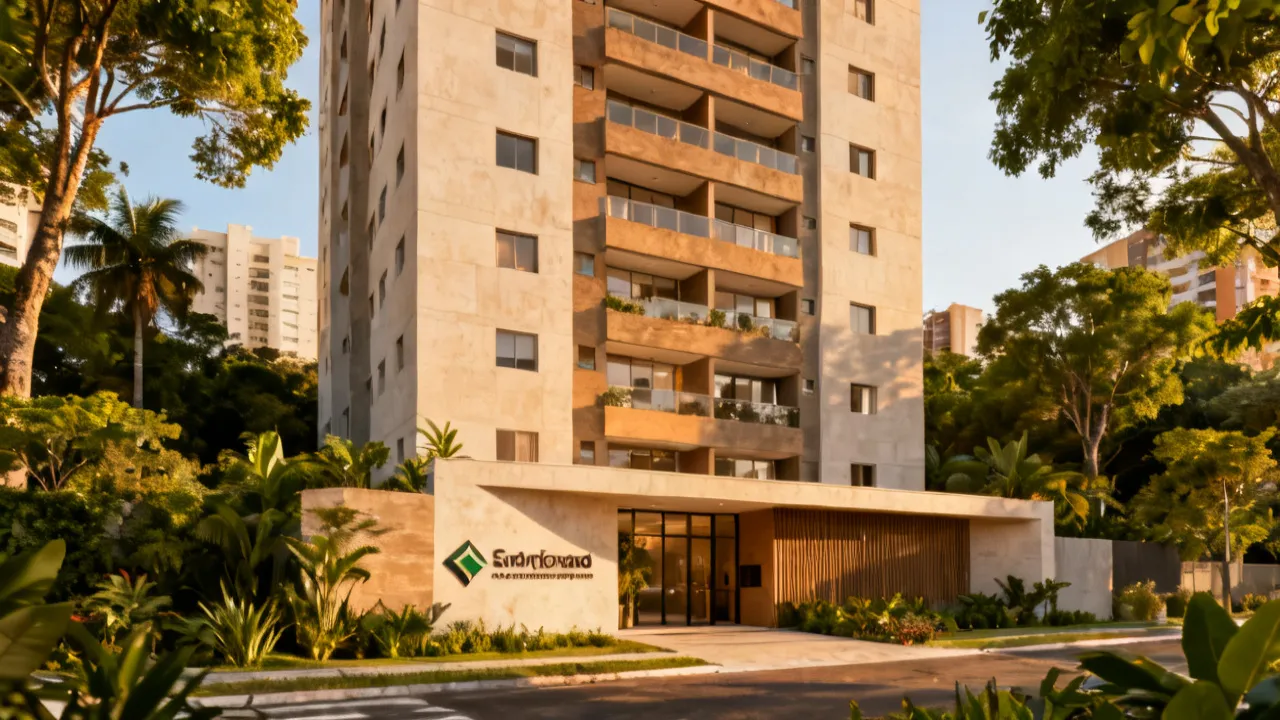
Arborea Itaim: Buyer’s Guide for Nearby Living
This guide explains how to evaluate Arborea Itaim for a well-informed purchase decision. Arborea Itaim refers to a residential development concept associated with the Itaim neighborhood’s demand in São Paulo’s urban fabric. Objectively, the guide covers location strengths, due-diligence priorities, typical procurement steps, and practical requirements—helping buyers align budget, documents, and expectations before committing.

Arborea Itaim: Start with the decision-critical checks
If you’re considering Arborea Itaim, begin by verifying the fundamentals that protect your timeline and budget: legal status, construction documentation, payment schedule clarity, condominium rules, and realistic delivery/occupancy assumptions. In high-demand São Paulo micro-markets like Itaim, small differences in contract terms and unit characteristics can significantly affect long-term satisfaction and resale flexibility. This guide gives an expert framework to assess the offering objectively, with a focus on practical buyer due diligence.
Because Itaim attracts both end users and investors, the “story” around a development can become louder than the underlying facts. A disciplined buyer’s approach turns marketing claims into checkable items. Your goal is not to “believe” the project—it’s to verify the conditions under which you would eventually live in, insure, maintain, and potentially resell the unit.
In other words: treat every decision point as if it will be audited later—because in practice, it often will be. A purchase decision is also a decision about paperwork, responsibilities, and operational realities. When you start with the critical checks, everything else becomes easier: negotiation, financing, and final unit selection.
Why Arborea Itaim attracts attention in the Itaim area
“Itaim” in São Paulo is widely recognized for its business momentum, dining and cultural options, and strong connectivity across the city. That environment tends to support consistent residential demand, especially from professionals seeking walkable convenience and reliable access to employment hubs.
In that context, Arborea Itaim is often discussed as a residential option aligned with the neighborhood’s preference for well-located living, contemporary building standards, and a lifestyle that blends workday routines with city leisure. However, a buyer should treat neighborhood reputation as context—not as proof of a specific unit’s value. The goal is to translate “location appeal” into measurable decision points.
Neighborhood appeal is useful because it tends to influence occupancy stability, rental attractiveness, and buyer liquidity later. But Itaim’s strengths can also create “expectation risk.” When an area is desirable, sellers may emphasize premium narratives (improved lifestyle, modern design, high-end amenities) while under-communicating the less exciting details: maintenance budgets, operational costs, construction tolerances, and the exact legal framing of delivery.
Therefore, rather than assuming that the area automatically confers value, evaluate how Arborea Itaim aligns with the typical Itaim resident/investor profile. Many buyers in Itaim favor: predictable daily logistics, manageable noise exposure, efficient layouts for flexible work-from-home needs, and building standards that hold up under daily use.
What “value” should mean for you (unit-by-unit, not marketing-by-marketing)
From an industry perspective, value is rarely a single number. It is a combination of (1) unit attributes (layout, orientation, finish quality, sound insulation), (2) building operations (condominium management model, amenity maintenance reality), (3) legal and contractual clarity (property status, liens, deadlines, penalties), and (4) your personal fit (commute pattern, lifestyle, long-term plan).
When evaluating Arborea Itaim, treat every claim as something you can verify: if an amenity is highlighted, confirm its costs, reservation rules, and whether it is operational and covered by insurance and maintenance budgets. If a schedule is emphasized, confirm how the contract defines delays, remedies, and acceptance criteria.
A practical way to apply this concept is to create a “value scorecard” for each candidate unit type. A value scorecard might include categories such as: usability, exposure to noise, natural light/ventilation, storage capacity, bathroom/comfort efficiency, and the unit’s ability to attract both end users and tenants (for investors). This is how you avoid being anchored to promotional photos, which often hide trade-offs.
For example, two units with similar areas can differ drastically in real-life utility. A slightly smaller unit with better circulation and practical storage can outperform a larger unit with wasted hallway space. In Itaim, where residents often live with a high workday routine and require functional storage for office/home hybrid use, those differences matter.
Also, “value” can change depending on how you plan to use the property. If you intend to live there long-term, the most important elements are likely: daily comfort, maintenance stability, and governance quality. If you intend to rent it, prioritize floor plan marketability, location micro-details, parking practicality (if applicable), and building amenity rules. Investors also consider how easily the condo rules allow tenant usage of common spaces.
Procurement and purchase readiness: confirm the basics before exploring unit details
In many Brazilian property transactions (including Itaim-area demand pockets), buyers move faster when they already have their financing pathway and document checklist prepared. Even when specific pricing is available during marketing, the most important step is to determine affordability using your own math: monthly cost tolerance, down payment capacity, and contingency for closing-related fees.
Because Arborea Itaim is being considered within a dense and competitive area, buyers are well-advised to confirm:
- Financing conditions: interest rate type, amortization schedule, and whether the bank requires additional appraisals.
- Contract payment structure: what is required at signing, during construction (if applicable), and at delivery/transfer.
- Additional charges: condominium formation costs, transfer taxes/fees, and any building-specific assessments.
This approach reduces the risk of last-minute constraints that can otherwise derail negotiations.
To make this practical, buyers should create an “affordability envelope” with at least four numbers: (a) maximum total monthly payment you can sustain comfortably (including condo fees if you finance), (b) maximum down payment and available liquidity at closing, (c) contingency for unexpected expenses (documentation fees, notary/registry costs, appraisal renewals, etc.), and (d) a plan for periods where cash flow is temporarily stressed (for instance, during construction installments, which can extend for many months).
In Itaim, where many units are marketed as “move-in ready lifestyle,” buyers sometimes underestimate the operational reality that condo fees start accumulating earlier than they expect (or rise soon after formation). Make sure your affordability envelope accounts for realistic projections rather than the lowest early estimates.
Supplier and development responsibility: how to evaluate credibility
For developments associated with names such as Arborea Itaim, credibility is built through verifiable responsibility. Rather than relying on general statements, ask for concrete references and evidence:
- Developer track record: completed projects, delivery consistency, and documented customer experiences.
- Contractual counterpart: confirm who signs the sale and who bears legal responsibility for key obligations.
- Technical documents: building approvals, registration status, and compliance records.
- Condominium governance: whether there is a defined management structure and how the first years are handled.
In practice, buyers often feel confident after reviewing documents directly with counsel or a qualified professional, because it converts “trust” into verified compliance.
A deeper credibility check should also consider the project’s construction and engineering chain: who performs the construction, who issues technical responsibilities, and whether there is a transparent paper trail for inspections, permits, and compliance approvals. In Brazilian property projects, documentation quality can materially affect your options if something goes wrong.
When you evaluate credibility, look for consistency. Consistency means: the marketing description matches the contract; the schedule aligns with documented timelines; the amenities described match the condominium project and budget; and the financial and operational responsibilities are clearly assigned.
If you notice frequent discrepancies—such as an amenity being promoted without a clear cost allocation, or a timeline being described differently by different representatives—this is a signal to slow down and request written clarifications.
Location and lifestyle fit: test Itaim-area convenience with real routines
Itaim is known for an active urban rhythm—commuting, business meetings, and weekend leisure tend to cluster naturally due to neighborhood characteristics. To evaluate Arborea Itaim beyond aesthetics, simulate your routine:
- Map your typical commute and compare travel times in morning vs. evening peaks.
- Assess walking convenience for groceries, pharmacy needs, and daily services.
- Consider noise patterns: street frontage units may feel different from interior-facing layouts.
- Evaluate “amenity walking distance” if you prefer lifestyle convenience over car usage.
For many buyers, these practical checks reveal whether the neighborhood supports a long-term lifestyle—or whether you’ll frequently rely on taxis/ride-hailing, which can affect total monthly cost.
To go even further, buyers often benefit from doing “two-day field tests.” Spend time near the building at multiple times: a weekday morning (commute rush), weekday evening (restaurant peak), and weekend midday (leisure/traffic). You’re checking for subtle factors that marketing cannot capture—such as whether a particular street corridor is noisy, whether pedestrian flow creates comfort issues, and whether nearby construction or traffic patterns are persistent.
Additionally, evaluate access and logistics. In a dense neighborhood like Itaim, the comfort of entering/leaving the building and managing daily deliveries may matter. If the building has parking or loading areas, confirm rules and practical usage: do residents experience frequent bottlenecks? Is there secure bicycle storage or space that supports modern lifestyle needs? Are there restrictions on moving furniture that could complicate future relocations?
For investors, micro-location matters too. Tenants often choose rentals based on “daily convenience,” not just proximity in a map sense. Quiet streets, reliable access to transit, and perceived safety affect occupancy rates and reduce vacancy risk.
Risk management: the non-glamorous items that determine your confidence
Even when a development sounds promising, buyers should handle risk systematically. The most common issues are not aesthetic; they’re contractual and administrative. For Arborea Itaim, focus on the following:
1) Documentation status
Confirm the registration situation, approvals, and whether the property is legally aligned for sale/transfer. If you’re buying during construction, verify that the developer’s legal and financial conditions are clearly documented.
Documentation status isn’t just “paperwork for paperwork’s sake.” It determines whether you can legally enforce delivery, whether the unit can be transferred when expected, and whether you might face delays due to administrative steps. The more complex the transaction (for example, if there are multiple parties or if financing triggers extra requirements), the more important it is to understand how legal status affects your timeline.
2) Delivery and acceptance criteria
Understand how delivery is defined. Ask what constitutes compliance at acceptance: tolerances, finishing standards, and how punch-list items are handled.
Buyers should be careful with vague language such as “substantial completion” unless the contract clearly defines what that means in tangible terms. Acceptance criteria should specify what you can test, who performs inspections, how deviations are documented, and the timeline for remedy after acceptance.
Additionally, confirm whether there are “delivery scenarios.” Sometimes, contracts distinguish between initial delivery for occupancy and final completion for registration. Make sure you understand what you can do as soon as you receive keys, and what obligations remain unfinished.
3) Condominium operations
Condominium life is where hidden long-term cost tends to appear: insurance structure, maintenance approach, and how amenity upkeep is budgeted. Ask for historical estimates and current projections if available.
It is common for newly formed condominiums to experience cost adjustments in early years. The first-year budget may understate operational expenses, especially for amenities requiring specialized maintenance (pools, gyms, coworking lounges, HVAC, security systems, and common area cleaning). Confirm what assumptions the budget is based on and ask whether there are planned incremental adjustments.
When you evaluate condo operations, also ask how management is selected and what governance mechanisms exist. For instance, how are decisions on major repairs handled? What is the process for establishing reserve funds? A building that is well-managed tends to protect both property value and resident comfort over time.
4) Resale and rental flexibility
While no buyer can guarantee appreciation, you can improve outcomes by selecting a unit that is broadly marketable: functional floor plan, durable finishes, and reasonable noise/light expectations. For many people, this “market fit” becomes the difference between easy and difficult resale later.
In Itaim, resale often depends on demand for similar layouts and the unit’s ability to meet buyer expectations regarding sound and light. If a unit is oriented such that it receives strong noise at predictable times (for example, due to nearby nightlife streets), it may attract fewer buyers or rent less readily unless the price compensates. This is why sound testing and orientation checks matter.
Step-by-step comparison and requirements (supplementary, decision-focused)
| Decision Area | What to Compare | Practical Conditions / Requirements |
|---|---|---|
| Legal & registration | Sale contract clarity, property registration status, compliance approvals, and transfer pathway | Request documentation reviewed by your counsel; confirm deadlines and legal responsibilities before signing |
| Financing & payment plan | Down payment amount, installment schedule, conditions for financing approval (if applicable) | Provide your bank affordability profile; verify total cost including closing/transfer fees |
| Building delivery | Delivery date definition, acceptance rules, punch-list process, and remedies if delays occur | Ask for written clauses on delays and quality acceptance; ensure you understand remedy mechanics |
| Condominium governance | Condominium fee composition, management plan, insurance approach, amenity maintenance scope | Request fee structure details; confirm whether amenities are operational and how budgets are allocated |
| Unit attributes | Layout efficiency, orientation, ventilation, sound insulation expectations, and finish durability | Compare unit plans and test exposure to noise/light; align with your daily routine needs |
| Supplier credibility | Developer track record, contractor responsibility, and evidence of prior delivery quality | Seek verifiable project references; confirm who holds contractual responsibility for key obligations |
Expert commentary: how to interpret price and what “cost” really includes
Even though buyers often search for “price” first, the professional lens is “cost-to-own.” In a development concept like Arborea Itaim, the headline price may be less informative than the total monthly and long-term cost profile. Costs can include condominium fees, insurance, utilities configuration, and potential special assessments if initial setup budgets require recalibration.
As a disciplined method:
- Compute affordability using your maximum monthly comfort level, not only the mortgage payment.
- Add one-time closing costs (transfer-related fees, notary/registry expenses, and any legal charges).
- Stress-test scenarios: consider what happens if interest conditions or condominium fees move upward.
- Request a transparent cost breakdown so the comparison between units is apples-to-apples.
This kind of analysis is the most reliable way to decide whether a unit truly fits your budget and lifestyle.
Price interpretation also requires understanding what the unit “package” includes. In some developments, certain features may be optional, upgrades may be priced separately, or finishing specifications may vary by tower/floor orientation. Before comparing units based solely on price per square meter, clarify what finishes, appliances, and standard equipment are included.
Another cost-to-own factor is maintenance lifecycle. For example, if the building uses specific façade materials or if common areas require periodic specialized cleaning, these costs can influence future condo fees. It may be difficult to predict precisely, but you can evaluate whether the developer has provided a realistic budget model and reserve fund strategy.
Finally, investors should consider “holding cost” risk. If you buy and later discover that condo fees are significantly higher than expected or if amenities are restricted (limited hours, costly reservation fees, or unclear access rules), the net rental return can be affected. This is why you should ask for the operational rules and fee breakdown early, not after you are already under contract.
Local nuance: living in Itaim means planning around city rhythm
Buyers near Itaim often describe the neighborhood as “busy but rewarding.” The upside is access: cultural venues, business connectivity, and dining choices. The trade-off is that street activity can influence perceived comfort—particularly for units with certain orientations or proximity to main corridors.
To match expectation with reality for Arborea Itaim, pay attention to how the building sits relative to nearby streets and pedestrian flows. If you prefer quieter evenings, spend time in the area at different day parts. In Brazil’s urban life, that practical test frequently reveals comfort differences that brochures never capture.
This city rhythm also affects practical needs like deliveries, commuting logistics, and public space use. In a dense area, curb-side availability may be limited; traffic patterns may change throughout the day; and seasonal variations (rainy seasons affecting street surfaces and walking comfort) can influence day-to-day experience.
If the building offers amenities such as coworking spaces or shared lounges, understand how these spaces function in real life. For example: are there time limits? Are reservations mandatory? Are spaces restricted to certain resident profiles? Are visitors allowed? In Itaim, where many residents work irregular schedules, these rules can matter more than the amenity’s presence on a floor plan.
For sound comfort, consider a simple question: where does your unit’s biggest source of noise risk come from? It could be street noise, mechanical systems, or internal building activity (such as shared circulation areas or amenities). The answer informs which unit you should prioritize.
What to ask during due diligence (high-impact questions)
Below are questions commonly used by experienced buyers and their advisors to reduce ambiguity:
- What is the exact legal status of the property/development and the transfer timeline?
- How is delivery defined, and what are the acceptance criteria and punch-list procedures?
- Can I receive a detailed condominium cost breakdown (including major categories like insurance, maintenance, and staff)?
- Are there written rules for amenities (reservations, hours, restrictions, and noise considerations)?
- Who provides the technical responsibility and documentation for construction and compliance?
- How are delays handled contractually, including remedies and penalties (if any)?
These questions help you move from “interest” to “informed consent.”
To make due diligence more effective, do not ask only “what” and “who”—also ask “how.” For instance, instead of asking whether the condo has insurance, ask which risks are covered, what the insurance amounts are (if available), and what the deductible structure implies for minor damages. Instead of asking whether there is a punch-list, ask how disagreements are resolved and what happens if you do not accept a work item.
You should also ask: what communication process exists between residents and management? A building can have good amenities “on paper” but suffer from weak communication and maintenance response delays. This can influence resident satisfaction and operational costs.
Industry context and sources (objective background)
To ground your evaluation in reliable context, it helps to reference established publications on Brazilian housing finance and property market structure. For overall methodology and legal/consumer orientation, buyers typically consult official or widely recognized sources. Two reputable categories include:
- Central bank and official housing/credit reporting for understanding mortgage mechanisms and general credit conditions.
- Industry research institutions that publish housing market insights and methodology notes.
Examples of commonly used authoritative references include publications from the Banco Central do Brasil and market reports by recognized real-estate analytics organizations. For the most accurate figures, use the latest editions available at the time you evaluate Arborea Itaim.
While official sources will not tell you specific facts about unit layout or condo rules, they provide the macro understanding you need to avoid financial surprises. For example, mortgage interest dynamics and credit policy changes can affect affordability—especially when installment plans interact with your monthly budget.
Additionally, understanding general housing market patterns can help you evaluate resale and rental expectations. Even if you don’t plan to sell soon, it’s useful to understand whether the local market has stable buyer demand and how rental demand behaves during different economic conditions.
FAQs about Arborea Itaim
1) What is Arborea Itaim, and who is it suited for?
Arborea Itaim is typically discussed as a residential development option associated with the Itaim neighborhood’s demand characteristics—appealing to buyers who prioritize urban convenience, connectivity, and contemporary living. It is often best suited for those who can evaluate unit fit, condominium operations, and contract terms carefully rather than relying on name recognition alone.
In practice, it may be especially attractive for professionals who value short commuting times and for buyers who want modern building standards that align with an urban lifestyle. If you are an investor, you will still need to evaluate condo fee profile, amenity access rules, and unit layout marketability. Location helps, but the economics depend on operational realities.
2) How can I verify supplier/developer credibility?
Ask for verifiable evidence: documented project history, the identity of the contractual counterpart, compliance documentation, and records of delivery practices. If possible, review past outcomes and seek professional counsel to interpret legal documents tied to Arborea Itaim.
Credibility verification should also include checking whether the developer has a consistent “delivery track record” and whether there are publicly known patterns of delay or disputes in other projects. Even without making judgments, patterns can inform your risk tolerance. The purpose is not to avoid all risk—it is to manage risk with informed decision-making.
3) Should I focus on price or on total cost-to-own?
Prefer total cost-to-own. Price matters, but long-term cost includes condominium fees, insurance, maintenance realities, closing expenses, and potential assessments. An expert evaluation treats “price” as one data point inside a broader financial picture.
Also consider opportunity cost. If a unit’s condo fees are higher, you might pay more each month even if the purchase price is lower. For many buyers, the “best deal” is not the lowest purchase price but the most stable and predictable monthly cost profile.
4) What documents should I request before signing anything?
Request the sale contract, relevant development approvals, evidence of registration/legal status, and any condominium-related documentation including fee structure and operating rules. If the transaction occurs during construction, confirm how the timeline and acceptance criteria are contractually defined.
Beyond the contract itself, request any technical specifications that describe finishing quality, mechanical system standards, and building envelope features. These details influence maintenance and comfort. If the project offers amenity facilities, request documentation that ties amenity operation to budget and rules.
5) How do I assess whether a unit layout is a good fit?
Compare plan efficiency (usable space vs. circulation areas), storage, ventilation/light exposure, and acoustic expectations. Then align the unit’s characteristics with your daily routine—work location, commute pattern, and typical at-home use. This is especially important for high-demand areas like Itaim where many layouts may be marketed similarly.
For remote-work realities, consider whether the layout enables a usable work zone, whether the living area provides enough natural light for day-to-day tasks, and whether bedroom placement influences noise at night (especially if the unit faces street activity). Also consider whether the kitchen and service area integrate in a way that supports your lifestyle—cooking frequency, guest hosting preferences, and laundry routines.
6) Are amenities worth paying extra for?
Amenities can be valuable, but only if they align with your lifestyle and come with financially sustainable operating costs. Evaluate who manages them, what their maintenance budget implies for condominium fees, and whether your usage matches rules and reservation limits.
It is also important to evaluate the “amenity risk.” Some amenities may be underutilized by residents, and underutilization still costs money because the condo must maintain systems regardless. If you buy for amenities you won’t use, you may effectively pay extra without receiving proportional value. On the other hand, if you will use amenities often (gym, coworking, event spaces), they can improve daily convenience and possibly resale desirability.
7) What should I do if I’m unsure about timelines or delivery conditions?
Clarify delivery definition, acceptance criteria, and contractual remedies for delays before committing. If you’re uncertain, use a qualified professional to review clauses tied to Arborea Itaim so you understand what recourse you may realistically have.
When timelines are unclear, insist on written terms. Verbal assurances are difficult to enforce. You also want to know whether there is a formula for delay compensation and what triggers it (for example, whether compensation applies only after a certain grace period, or whether certain circumstances exclude responsibility). This is where counsel review becomes essential.
8) How can I reduce resale risk?
Select a unit with broad market appeal: functional layout, durable finishes, reasonable orientation, and low “comfort friction” (noise, parking practicality, and everyday access). Resale outcomes depend heavily on unit usability and building reputation, not just the initial price.
Also consider future buyer preferences. Over time, buyers may prioritize energy efficiency, better sound insulation, and flexible spaces suited for work-from-home. While you can’t predict every trend, you can choose a layout and standard that likely remains desirable across buyer cycles. In Itaim, functional layouts and reliable comfort are typically consistent preferences.
9) Is it smart to negotiate?
Negotiation can be appropriate when you have verifiable leverage—such as financing approval readiness, document review completion, and clear understanding of total costs. Approach negotiation with documented questions rather than assumptions, especially when evaluating Arborea Itaim contract details.
Effective negotiation is not only about price; it can also address conditions like installment schedules, potential included upgrades, or clarity of contractual remedies. Even when price is difficult to move, you can often improve terms by ensuring the contract reflects your expectations in enforceable language.
10) Where should I get the latest market and credit context?
Use authoritative, up-to-date references such as official central bank publications and recognized housing/credit research bodies. Then connect that context back to your personal affordability analysis to decide whether Arborea Itaim fits your plan.
Market context helps you avoid misalignment between your budget and macro conditions. Credit policy, interest rate expectations, and general housing demand can shift quickly. Your due diligence should therefore be both document-based (project-specific) and context-based (market and financing).
Conclusion: make Arborea Itaim a documented decision, not a guess
Choosing Arborea Itaim is most successful when your process is structured: verify legal and supplier responsibility, map total cost-to-own, test unit fit with realistic routines, and confirm condominium operations. Neighborhood appeal matters, but your confidence should come from documentation, contractual clarity, and practical evaluation. If you follow the decision framework above, you’ll be prepared to compare options with a level of rigor that supports long-term satisfaction.
Ultimately, the “best” unit is the one that matches your life and withstands reality: realistic maintenance costs, understandable condo governance, enforceable delivery terms, and a layout that stays comfortable over time. When you build your decision around verifiable facts, the buying experience becomes less stressful—and your long-term ownership experience becomes more predictable.